 ASRock Radeon RX 9070 XTBest overall
- Memory
- 16GB GDDR6, 256-bit, 20 Gbps
- Boost clock
- 2970 MHz
- Power
- 800W recommended PSU, 2 x 8-pin
- Size
- 298 x 131 x 58 mm, 2.9-slot
Most recommended by reviewers
Check price at Amazon
 ASRock Radeon RX 9070 XTBest overallRunner-up2
 ASRock Radeon RX 9070 XT ChallengerBest value
We earn a commission when you buy through our links, at no extra cost to you. How this works.
The RX 9070 XT is AMD's current high-end card for 4K gaming, and it competes directly with NVIDIA's RTX 5070 Ti. Most of the cards on Amazon are the same chip with different coolers and clocks, so the choice comes down to cooling, size and price.
Our top pick is the ASRock Steel Legend. It is the card reviewers keep returning to for stock clocks and a sturdy cooler, and it is one of the best value cards here. The other picks cover quieter builds, smaller cases and lower prices.
1 ASRock Radeon RX 9070 XT | 2 ASRock Radeon RX 9070 XT Challenger | 3 Sapphire Pulse RX 9070 XT | 4 XFX Swift RX 9070 XT | 5 ASUS Prime RX 9070 XT White | |
|---|---|---|---|---|---|
| Best for | Best overall | Best value | Best for a classic look | Best for a mainstream build | Best for a white build |
| Memory | 16GB GDDR6, 256-bit, 20 Gbps | 16GB GDDR6, 256-bit | 16GB GDDR6, 256-bit | 16GB GDDR6 | 16GB GDDR6 |
| Boost clock | 2970 MHz | 2970 MHz | 2970 MHz (stock, confirmed by GPU-Z in LanOC's review) | Up to 2970 MHz | Up to 3030 MHz in OC mode (GPU Tweak III) |
| Outputs | DisplayPort 2.1a, HDMI 2.1b | 3 x DisplayPort 2.1a, 1 x HDMI 2.1b | 2 x HDMI, 2 x DisplayPort | HDMI, 3 x DisplayPort | Not listed |
| Check price at Amazon | Check price at Amazon | Check price at Amazon | Check price at Amazon | Check price at Amazon |
ASRock Radeon RX 9070 XTBest overallMost recommended by reviewers
Check price at Amazon ASRock Radeon RX 9070 XT ChallengerBest value
 Sapphire Pulse RX 9070 XTBest for a classic look
 XFX Swift RX 9070 XTBest for a mainstream build
 ASUS Prime RX 9070 XT WhiteBest for a white build


A factory-overclocked 16GB card with a sturdy triple-fan cooler, and our top choice for most 4K builds.
Most recommended by reviewers
Check price at AmazonPrices and availability on Amazon change often.
The ASRock Radeon RX 9070 XT Steel Legend 16GB is our top pick for buyers who want a factory-overclocked RX 9070 XT with a heavy-duty build.
This card ships with a 2970 MHz boost clock and a 2400 MHz game clock, so it runs at its peak out of the box. Its triple-fan cooler sits on a reinforced metal frame, which suggests a sturdy build for long gaming sessions. The 16GB of GDDR6 memory on a 256-bit bus gives it room for 4K textures and ray tracing, and it uses DisplayPort 2.1a and HDMI 2.1b outputs.
The card is 2.9 slots thick and 298 mm long, so it needs a large case with room to spare. It also calls for two 8-pin power connectors and an 800W recommended power supply. If your case is tight, the Challenger model uses the same core and boost clock with a lighter cooler.
If it's not for you, the ASRock Challenger 16GB OC offers the same core and boost clock for less money, while the ASUS Prime 16GB White OC is a 2.5-slot card that fits more cases.
One expert review recommends this card among the RX 9070 XT models it reviewed, and the spec sheet explains why: 16GB of GDDR6 on a 256-bit bus at 20 Gbps, and a boost clock of 2970 MHz out of the box. That combination keeps 4K frame rates steady in heavy titles.
The triple-fan cooler and reinforced frame make it a sensible long-term buy. You get the full RX 9070 XT at stock speed without paying for an extra-large custom cooler.


The same RDNA 4 core and 16GB memory at a lower price, with a quiet triple-fan cooler.
Prices and availability on Amazon change often.
The Challenger is the budget route to the same RX 9070 XT. The clocks and memory match the Steel Legend, and the price is usually lower. The three DisplayPort 2.1a outputs suit multi-monitor setups and high-refresh 4K displays.
Choose it if you want the core without the premium cooler. The 0dB idle mode keeps the card quiet during light use.


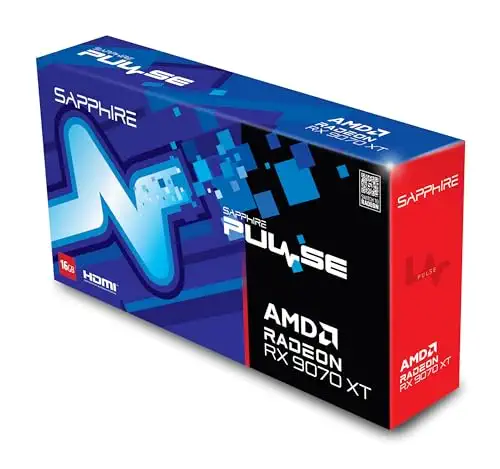
Sapphire's stock-clocked Pulse card, reviewed by LanOC alongside the RX 9070 XT's core specs.
Prices and availability on Amazon change often.
LanOC reviewed this card at stock clocks and confirmed its 2970 MHz boost with GPU-Z. Sapphire's Pulse is a popular, no-frills choice, and the mix of two HDMI and two DisplayPort outputs covers most monitors and TVs.
It makes sense for a builder who wants a straightforward card from a brand with a long record. The listing does not give the cooler dimensions, so check your case clearance before buying.
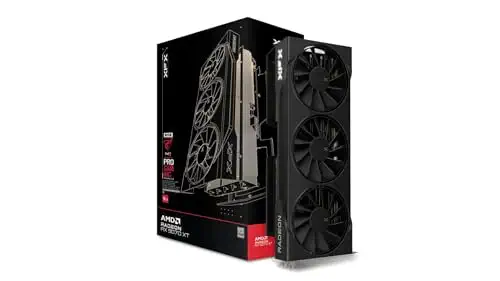


An XFX triple-fan card at a 2970 MHz boost, priced between the budget and premium options.
Prices and availability on Amazon change often.
XFX's Swift is a sensible middle choice: triple fans, a 2970 MHz boost clock and 16GB of memory at a price below the premium cards. One expert review includes it among the models it recommends.
It fits a standard mid-tower build well.


A white OC-edition card with a 2.5-slot cooler and dual-ball fan bearings, for builds that match the case.
Prices and availability on Amazon change often.
ASUS's white Prime is for builders who want the card to match the rest of the system. At 2.5 slots it is easier to fit than the 2.9-slot ASRock and Sapphire designs, and the phase-change thermal pad helps keep the GPU cool.
The 3030 MHz figure is the OC-mode clock with GPU Tweak III. Expect the default mode to run lower, and treat the number as the ceiling rather than the everyday speed.
For most 4K builds, the ASRock Steel Legend is the safest choice: it has the highest stock clocks and the strongest cooler here. If you want to spend less for the same core, the ASRock Challenger has the same boost clock. A smaller case rules out the 2.9-slot cards, so pick the ASUS 2.5-slot design or the EVO.
The ASRock Radeon RX 9070 XT Steel Legend is our top pick. It has a 2970 MHz boost clock, 16GB of GDDR6 and a triple-fan cooler, and one expert review recommends this model among the RX 9070 XT cards it reviewed.
The ASRock Steel Legend has the sturdiest cooler here, with a reinforced metal frame and triple fans. The ASUS Prime cards use phase-change thermal pads and dual-ball bearings, which suit a quieter build.
One expert review found the RX 9070 XT trades blows with the RTX 5070 Ti and was within 6% at 4K rasterized performance in its tests. Ray tracing still often trails NVIDIA, and NVIDIA keeps its advantage in features and efficiency.
It handles 4K gaming well without ray tracing, and it has 16GB of VRAM for 4K textures. Ray tracing has improved, but one expert review reports it still falls behind NVIDIA in many games, and it is badly beaten in some titles.
The RX 9070 XT has 64 compute units against 56 on the RX 9070, and a higher boost clock. LanOC describes the RX 9070 as aimed at the upper mid-range, so the XT is the better pick if you want the top card and can pay for it.
The RX 9070 XT leads the RTX 5070 in some tests, such as Dragon's Dogma 2 at 4K, and trails it in others, such as Final Fantasy XIV. It is close to the more expensive RTX 5070 Ti, but NVIDIA is ahead on ray tracing and efficiency.
Why trust CheckedBest
Every pick is an RX 9070 XT listing that is in stock on Amazon right now.
Our expert team tests products when it is needed and researches online and in interviews. Every guide is fact-checked and edited by a real person.
The CheckedBest editorial team · Updated Nov 7, 2026
How we pickEditorial standardsAffiliate disclosureReport a mistake
We earn a commission when you buy through our links, at no extra cost to you. It never decides the winner.
