 Fujifilm X-M5Best overall
- Sensor
- 26.1MP APS-C X-Trans 4
- Video
- 6K recording
- Weight
- 12.5 oz
Most recommended by reviewers
Check price at Amazon
We earn a commission when you buy through our links, at no extra cost to you. How this works.
If you want to start a YouTube channel, a camera that is easy to use and gives sharp, stable footage matters more than the highest spec sheet. Autofocus that keeps you in frame, a flip screen and decent audio do most of the work.
The Fujifilm X-M5 is our No. 1 pick: a small, light body with an open-gate sensor that lets you crop one shoot into horizontal and vertical video. The Sony ZV-E10 II is the runner-up, with stronger face tracking and a more complete vlogging setup, while the others cover pocket, action and full-frame needs.
1 Fujifilm X-M5 | 2 Sony ZV-E10 II | 3 DJI Osmo Pocket 3 | 4 Sony Alpha a6700 | 5 Sony ZV-E1 | |
|---|---|---|---|---|---|
| Best for | Best overall | Best for vlogging | Best pocket camera | Best mid-range hybrid | Best full-frame option |
| Sensor | 26.1MP APS-C X-Trans 4 | 26MP APS-C | 1-inch CMOS | 26MP APS-C | 12.1MP full-frame |
| Video | 6K recording | 4K 60p, 10-bit | 4K up to 120fps | 4K 60p, 10-bit | 4K 60p, no crop |
| Stabilization | Not listed | Not listed | 3-axis mechanical | In-body | 5-axis in-body |
| Check price at Amazon | Check price at Amazon | Check price at Amazon | Check price at Amazon | Check price at Amazon |
Fujifilm X-M5Best overallMost recommended by reviewers
Check price at Amazon Sony ZV-E10 IIBest for vlogging
 DJI Osmo Pocket 3Best pocket camera
 Sony Alpha a6700Best mid-range hybrid
 Sony ZV-E1Best full-frame option

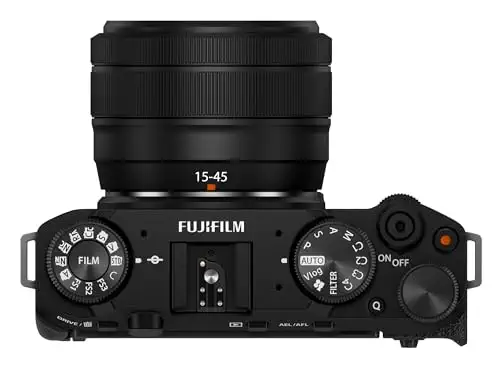
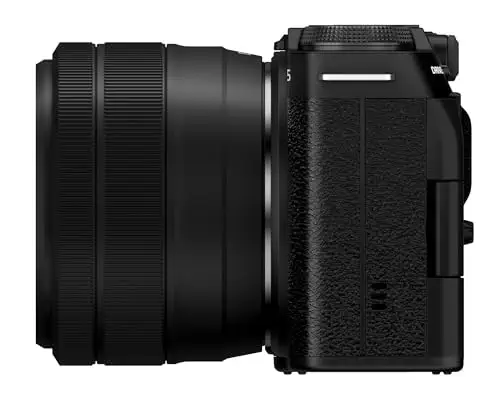


A small, light camera with 6.2K open-gate recording, so one shoot can serve horizontal and vertical videos.
Most recommended by reviewers
Check price at AmazonPrices and availability on Amazon change often.
The Fujifilm X-M5 is our pick for YouTube creators who want an interchangeable-lens camera that stays small enough to carry everywhere.
At 12.5 ounces, the X-M5 is the lightest and smallest X-series body, and it records 6K with open-gate recording. Reviewers note that the open-gate mode lets creators frame loosely and then crop one file into both horizontal YouTube video and vertical clips. Its 26.1MP APS-C X-Trans 4 sensor and X-Processor 5 give it strong image quality for the price, and reviewers describe it as a good value for an interchangeable-lens camera.
The X-M5 has no in-body stabilization, so you will rely on digital stabilization, which adds crop. Reviewers also say its autofocus is not as reliable as Sony's, which matters if you film fast-moving subjects. If you need the strongest tracking, the Sony ZV-E10 II is the better fit.
If it's not for you, the Sony ZV-E10 II suits creators who prioritize subject tracking and a vari-angle screen for self-filming, while the DJI Osmo Pocket 3 suits those who want built-in gimbal smoothness in a pocket-sized body.
Reviewers highlight the X-M5's open-gate sensor, which records a taller frame so you can crop for YouTube and Shorts from one take. At 12.5 ounces it is easy to carry on a shoot, and the image quality is strong for the price.
The trade-off is stabilization. Without in-body stabilization you will want a gimbal or tripod for walking shots.


A vlogging-focused body with a vari-angle screen, built-in mic and strong eye autofocus.
Prices and availability on Amazon change often.
The ZV-E10 II is built for talking to the camera. Its autofocus holds faces and eyes reliably, and the vari-angle screen makes framing yourself easy. The bundle adds a microphone and tripod to get started.
Plan on a gimbal or tripod if you walk while filming, since stabilization is digital and crops the frame.


A pocket camera with a 1-inch sensor, 4K recording and built-in gimbal stabilization.
Prices and availability on Amazon change often.
If you film on the move, the Pocket 3 removes the need for a separate gimbal. Its 1-inch sensor is a step up from phone cameras, and the rotating screen works for both horizontal and vertical shooting.
Expect weaker results in dim rooms than with a larger sensor.


An APS-C hybrid with 4K 60p video, subject tracking and in-body stabilization.
Prices and availability on Amazon change often.
Reviewers describe the a6700 as hard to beat for APS-C video. It records 4K at 60 frames a second and tracks subjects well, making it a good step up once you outgrow a vlogging body.
It is a body only, so budget for a lens and microphone.


A full-frame vlogging camera with 4K 60p, no crop and in-body stabilization.
Prices and availability on Amazon change often.
The ZV-E1 is a full-frame body designed for video. Its sensor performs well in dim light, and 4K 60p recording keeps the full width of the frame, which suits cinematic shots.
Beginners will probably get more value from a smaller body, since this is a significant investment.
Choose the X-M5 if you want a light camera that records multiple aspect ratios. Choose the ZV-E10 II if you film yourself most often. Choose the Osmo Pocket 3 if you walk while filming and want built-in stabilization.
Your phone may be enough if you mostly film on a tripod or gimbal. A camera is most useful when you need better low-light results or more control over focus.
It depends on the shoot. A GoPro suits action and walking footage, while a mirrorless camera with interchangeable lenses gives better image quality and control for talking-head videos.
4K is enough for YouTube. 8K files are large and slow to edit, so spend the money on lighting and audio instead.
The Sony ZV-E10 II Vlogging Kit is a strong budget choice for YouTube videos, with a lens included.
Start with the Sony ZV-E10 II for its easy autofocus and flip screen, or the Osmo Pocket 3 if you film on the move.
The ZV-E10 II is built for vlogging, with a vari-angle screen and strong eye tracking.
Why trust CheckedBest
This shortlist is built from editorial reviews and creator forum threads, checked against current Amazon listings and stock. Every pick has a clear role, from a compact vlogging body to a full-frame hybrid.
Our expert team tests products when it is needed and researches online and in interviews. Every guide is fact-checked and edited by a real person.
The CheckedBest editorial team · Updated Nov 10, 2026
How we pickEditorial standardsAffiliate disclosureReport a mistake
We earn a commission when you buy through our links, at no extra cost to you. It never decides the winner.
