 Dorhui 300W 216 LEDs UV Exposure UnitBest overall
- Wattage
- 300W
- Wavelength
- 395nm
- LEDs
- 216
- Adjustment
- 360° bracket
Most recommended by reviewers
Check price at Amazon
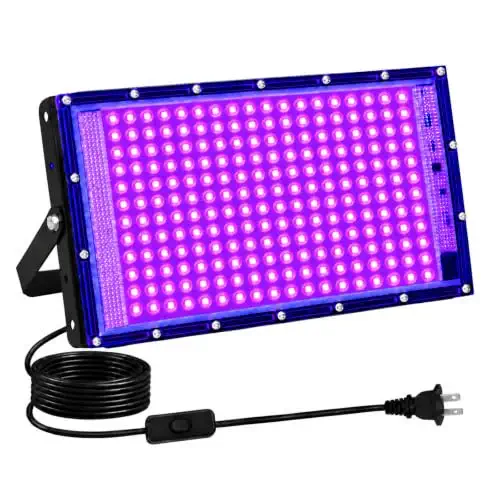 Dorhui 300W 216 LEDs UV Exposure UnitBest overallRunner-up2
 UrekaGo UV LED Exposure Unit (300W listing,Strong all-rounder

Reviewed by
Contributing Reviewer
I'm a writer, horror junkie, and home baker who believes life is better with a good book in one hand and a freshly baked treat in the other.
We earn a commission when you buy through our links, at no extra cost to you. How this works.
For cyanotype, the light that matters most is 365 to 395 nm UVA output with enough wattage to expose a print in a reasonable time, plus a stand that holds steady while you work. Wavelength and distance decide how fast a print develops, so both are worth checking before you buy.
Our top pick is the Dorhui 300W 216 LEDs unit, which gives the most UV energy on the shortlist and adjusts widely for larger prints. Four other picks cover budget, portability and clamp mounting, so you can match the light to your space.
1 Dorhui 300W 216 LEDs UV Exposure Unit | 2 UrekaGo UV LED Exposure Unit (300W listing, 50W 395nm) | 3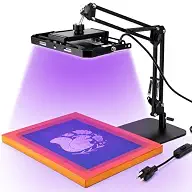 Caydo 96 LEDs UV Light 395nm | 4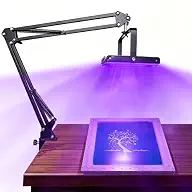 Tasolotoho 100W 96 LEDs UV Light 395nm | 5 Feghezja 150W LED Exposure Unit | |
|---|---|---|---|---|---|
| Best for | Best overall | Strong all-rounder | Best budget | Best for small desks | Highest wattage |
| Wattage | 300W | 50W | 50W | 100W | 150W |
| Wavelength | 395nm | 395nm | 395nm | 395nm | 395nm |
| Adjustment | 360° bracket | Height and angle | Not listed | Not listed | 360° rotation |
| Check price at Amazon | Check price at Amazon | Check price at Amazon | Check price at Amazon | Check price at Amazon |
Dorhui 300W 216 LEDs UV Exposure UnitBest overallMost recommended by reviewers
Check price at Amazon UrekaGo UV LED Exposure Unit (300W listing, 50W 395nm)Strong all-rounder
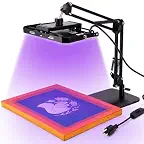 Caydo 96 LEDs UV Light 395nmBest budget
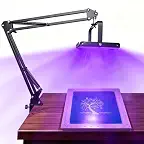 Tasolotoho 100W 96 LEDs UV Light 395nmBest for small desks
 Feghezja 150W LED Exposure UnitHighest wattage
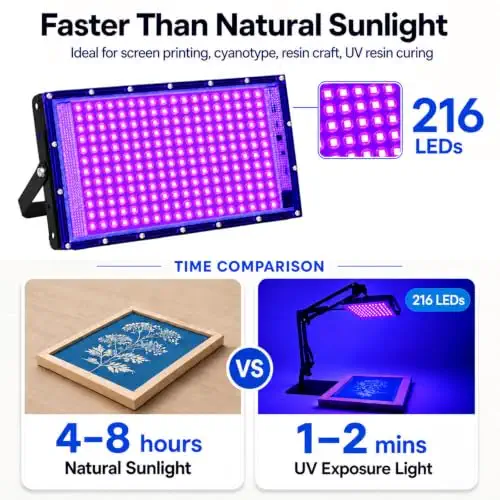


The strongest light on the shortlist, with a 360° adjustable bracket for larger prints.
Most recommended by reviewers
Check price at AmazonPrices and availability on Amazon change often.
One catchHeavier output means more heat, so limit long continuous runs.
The 300W, 216-LED panel gives the most UV energy of any light on the shortlist. That matters for cyanotype because more output means shorter exposure times and room to work with larger sheets. The 360° bracket lets you aim the panel over the exposure area without moving the whole setup.
Expect to run a step test first, since exposure depends on paper, coating and distance from the panel.


A balanced 50W unit on a heavy foldable stand, suited to cyanotype and screen printing.
Prices and availability on Amazon change often.
The UrekaGo pairs a 50W, 395nm lamp with a stand heavy enough to stay put while you reposition it. For a home cyanotype setup it is a sensible middle ground, with enough adjustability to aim the light over a sheet of paper or a small screen.
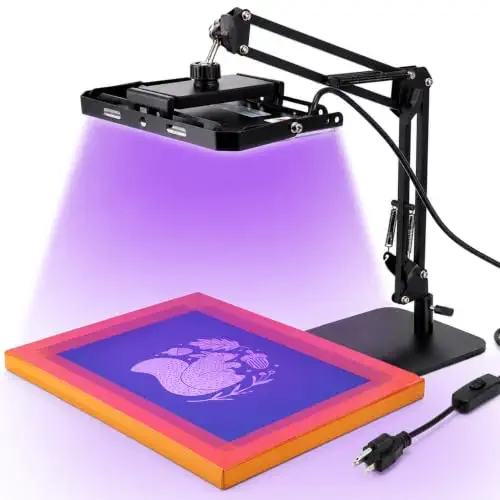


A low-cost 96-LED light with a sturdy base and an on/off switch.
Prices and availability on Amazon change often.
If you are testing cyanotype for the first time, the Caydo gets you a working 395nm light for the least money. Its 730g base keeps it steady on a bench, and the setup is plain plug in and go.
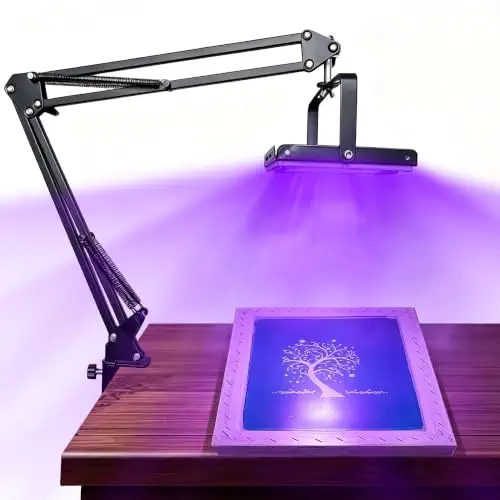


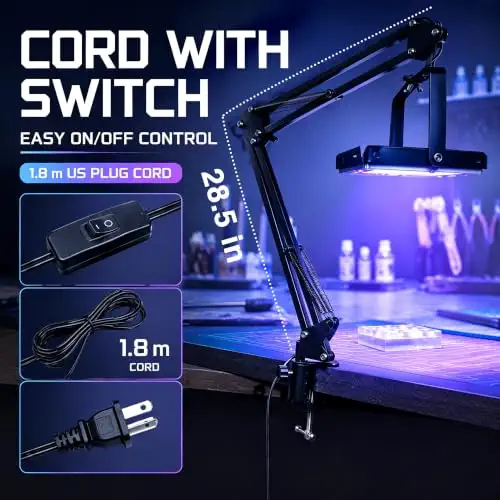

A 100W panel on a desk-edge clamp, so it frees up the work surface.
Prices and availability on Amazon change often.
The Tasolotoho clamps to a table edge rather than sitting on the surface, which helps in a small studio. Its 100W panel is stronger than the budget units, and the spring arm reaches the print without tipping.


The strongest 150W clamp-mounted option, with a wide 360° stand.
Prices and availability on Amazon change often.
The Feghezja 150W is the strongest light here after the Dorhui 300W, and it mounts on a table edge rather than a heavy base. If you want shorter exposures without a floor stand, this is the one to consider.
The Dorhui 300W suits anyone exposing larger prints who wants the shortest exposures. The Caydo budget unit suits first-time cyanotype users. The clamp units suit small desks where a floor stand takes up too much room.
Look for 365 to 395 nm UVA output, since cyanotype chemistry responds most strongly in that range. Check that the stand holds steady at the angle you need, and plan for a step test because distance and paper change exposure time.
Both work for cyanotype. The 365 nm wavelength is cited as the most responsive for the chemistry, while 395 nm units are common and effective for screen printing and cyanotype alike. Test with your own paper before committing.
Higher wattage means shorter exposures. A 50W light works for small prints with longer times, 100W to 150W suits most home prints, and 300W is best for large sheets. Use a step test to find your exposure.
Not quite. Blacklights often emit weaker UVA, while dedicated UV exposure lights deliver more output at the wavelengths cyanotype needs. A dedicated unit gives more reliable results.
It depends on wattage, distance and coating. A 50W light may need several minutes, while stronger units cut that time. Run a short test strip first and adjust from there.
A box lined with foil spreads the light more evenly. Mount the lamp inside at a fixed distance and use the same setup each time so your exposures are repeatable.
No single brand dominates. Match the wattage, wavelength and stand to your print size and workspace, and check the listing specs before buying.
Meet the reviewer
Contributing Reviewer
I'm a writer, horror junkie, and home baker who believes life is better with a good book in one hand and a freshly baked treat in the other. When I'm not researching products, you'll find me chasing after my preschooler, getting lost in a creepy novel, or putting my mixer to good use in the kitchen. I love finding products that are genuinely worth the money and sharing my useful finds with readers. After all, nothing's scarier than spending money on something that doesn't live up to the hype!
Why trust CheckedBest
We compared every UV exposure unit on the shortlist against its listing specs, then checked stock on Amazon. Picks are weighed on wattage, wavelength, stand stability and how well each suits a home cyanotype setup.
Our expert team tests products when it is needed and researches online and in interviews. Every guide is fact-checked and edited by a real person.
The CheckedBest editorial team · Updated Oct 17, 2026
How we pickEditorial standardsAffiliate disclosureReport a mistake
We earn a commission when you buy through our links, at no extra cost to you. It never decides the winner.
