 Celestron StarSense Explorer LT 114AZBest overall
- Aperture
- 114mm (4.5 in) Newtonian reflector
- Mount
- Manual altazimuth with smartphone app guidance
- Warranty
- 2-year US warranty
Most recommended by reviewers
Check price at Amazon
 Celestron StarSense Explorer LT 114AZBest overallRunner-up2
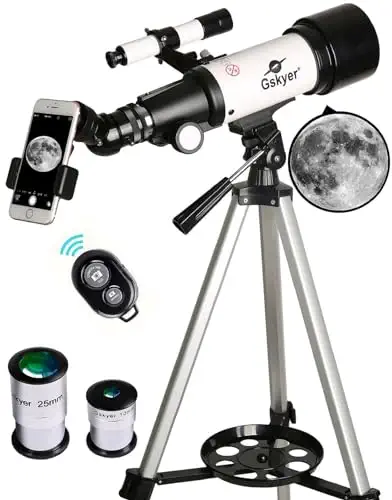 Gskyer 70mm AZ Travel TelescopeBest budget
We earn a commission when you buy through our links, at no extra cost to you. How this works.
A telescope can open up the Moon, the planets and bright star clusters, but the wrong one tends to frustrate new owners. Picking the right type matters more than chasing high magnification.
Our No. 1 pick is the Celestron StarSense Explorer LT 114AZ, which uses your phone to guide you to targets, making it a strong first scope for most beginners. The other picks cover a simpler manual reflector, a refractor that needs no collimation and a computerized GoTo model for people who want more automation.
1 Celestron StarSense Explorer LT 114AZ | 2 Gskyer 70mm AZ Travel Telescope | 3 Celestron NexStar 8SE | 4 Celestron AstroMaster 70AZ | |
|---|---|---|---|---|
| Best for | Best overall | Best budget | Best computerized | Best refractor |
| Aperture | 114mm (4.5 in) Newtonian reflector | 70mm refractor | 8-inch Schmidt-Cassegrain | 70mm achromatic refractor |
| Mount | Manual altazimuth with smartphone app guidance | Adjustable aluminium tripod, altazimuth | Fully computerized GoTo with 40,000+ object database | Not listed |
| Warranty | 2-year US warranty | Not listed | 2-year warranty | Not listed |
| Check price at Amazon | Check price at Amazon | Check price at Amazon | Check price at Amazon |
Celestron StarSense Explorer LT 114AZBest overallMost recommended by reviewers
Check price at Amazon Gskyer 70mm AZ Travel TelescopeBest budget
 Celestron NexStar 8SEBest computerized
 Celestron AstroMaster 70AZBest refractor

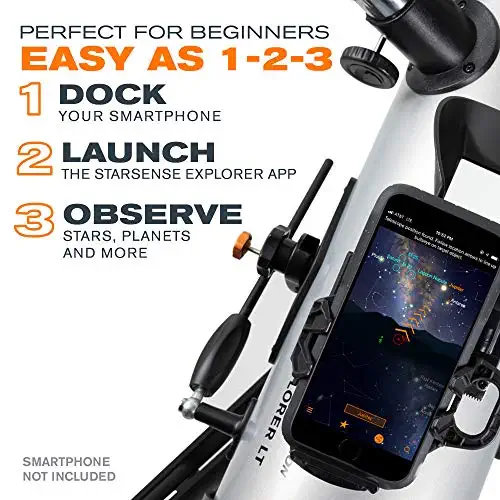


A phone-guided reflector that points you to planets and nebulae, ideal for a first telescope.
Most recommended by reviewers
Check price at AmazonPrices and availability on Amazon change often.
For most beginners who want to find things quickly, the Celestron StarSense Explorer LT 114AZ is the pick we'd choose first.
Its 114mm Newtonian reflector gathers enough light to show the Moon, planets like Jupiter and Saturn, and bright deep-sky targets such as the Orion Nebula and Andromeda Galaxy. The standout feature is the phone app, which uses sky recognition to guide you to targets with on-screen arrows and builds a list of the best objects to see from your location and time. Owners on r/telescopes say this is what keeps first-time users from giving up, though we'd note that is a reported impression rather than something we measured. It also comes with a 2-year US warranty.
Reflector optics can need occasional collimation, which is a bit of upkeep the refractors in this list avoid. The app also depends on a working smartphone, so the telescope is less useful if your phone is out of charge. Reviewers suggest it suits older kids and teens, perhaps over about 12.
If it's not for you, the Celestron AstroMaster 70AZ suits anyone who wants a simple refractor with no collimation and two eyepieces included, while the Gskyer 70mm AZ Travel Telescope fits a tighter budget and trips.
The StarSense Explorer LT pairs a 114mm reflector with a sky-recognition app that turns the search for targets into a guided tour. Reviewers single it out as a great find for tech-savvy teens and beginners who want to learn the sky without memorising star charts.
The mount is simple and manual, so you will move the scope yourself, but the on-screen arrows make finding things easy. It is the most approachable way to start.


A small, lightweight refractor with a carry bag, a good low-cost choice for kids and travel.
Prices and availability on Amazon change often.
If you want to see the Moon and bright planets without spending much, this compact refractor keeps the cost down. Its carry bag and phone adapter make it a practical choice for families and travel.
Expect modest views of faint deep-sky objects. It is best treated as a light, easy starter rather than a long-term instrument.


A large 8-inch GoTo telescope that finds objects automatically, for serious beginners who want automation.
Prices and availability on Amazon change often.
The NexStar 8SE is the choice for beginners who want a telescope that finds objects for them. Its large aperture gathers plenty of light, and the GoTo system takes the hunt out of observing.
It costs far more than the rest of the list and is heavier to move, so it suits people who are sure they will keep observing.


A simple 70mm refractor with no collimation, good for beginners who want a plug-and-go scope.
Prices and availability on Amazon change often.
The AstroMaster 70AZ is a classic beginner refractor: no collimation, a complete set of accessories and simple controls. Reviewers note that it is ultra-portable and a good budget pick for the Moon and planets.
The tripod is not the sturdiest, so buy a steadier one if you plan to observe for long sessions.
Choose a phone-guided reflector if you want to learn the sky quickly. Pick a refractor if you want no collimation and a light, simple scope. Go for a computerized model if you want the scope to find targets for you and you are ready to spend more.
The Celestron StarSense Explorer LT 114AZ is our top pick because its phone app guides you to targets. Choose a simpler refractor like the AstroMaster 70AZ if you want something that needs no app.
A reflector with a larger aperture, such as the 114mm StarSense LT or the NexStar 8SE, shows planets with more detail. Higher magnification also helps with planets.
Larger apertures gather more light for faint objects, so the NexStar 8SE is the strongest choice here. Expect dimmer views from the smaller scopes.
Why trust CheckedBest
This shortlist is built from four telescope configurations that are in stock on Amazon right now, weighed against beginner reviews, community advice and the listings themselves. We checked aperture, mount type, included accessories and ease of setup for each one.
Our expert team tests products when it is needed and researches online and in interviews. Every guide is fact-checked and edited by a real person.
The CheckedBest editorial team · Updated Nov 7, 2026
How we pickEditorial standardsAffiliate disclosureReport a mistake
We earn a commission when you buy through our links, at no extra cost to you. It never decides the winner.
