Favero Assioma DUOBest overall
- Sensing
- Dual-sided (left and right)
- Accuracy
- ±1% claimed
- Connectivity
- Bluetooth and ANT+
- Operating range
- -10°C to 60°C
Most recommended by reviewers
Check price at Amazon
We earn a commission when you buy through our links, at no extra cost to you. How this works.
Anyone who has tried to pace a long climb by feel knows how easily the first hour goes too hard and the last one falls apart. A power meter fixes that by showing you the effort in watts, so you can ride the same plan whether it's windy, hilly or you're just having a bad day.
Our pick is the Favero Assioma DUO: pedals you can swap between bikes in minutes, with rave reviews from owners who say they just work. If you only need the basics, there are cheaper one-sided and crank options below, plus a mountain-bike pedal set and a budget crankset.
1 Favero Assioma DUO | 2 Favero Assioma UNO | 3 Favero Assioma PRO RS-2 | 4 Favero Assioma PRO MX-1 | 5 GEOID PM500 Crankset | |
|---|---|---|---|---|---|
| Best for | Best overall | Best budget pedals | Best for Shimano road shoes | Best for mountain and gravel | Cheapest way in |
| Sensing | Dual-sided (left and right) | Single-sided (left) | Dual-sided | Single-sided (left) | Crank power meter |
| Accuracy | ±1% claimed | ±1% claimed | ±1% claimed | ±1% claimed | ±1.5% claimed |
| Check price at Amazon | Check price at Amazon | Check price at Amazon | Check price at Amazon | Check price at Amazon |
Favero Assioma DUOBest overallMost recommended by reviewers
Check price at Amazon Favero Assioma UNOBest budget pedals
 Favero Assioma PRO RS-2Best for Shimano road shoes
 Favero Assioma PRO MX-1Best for mountain and gravel
 GEOID PM500 CranksetCheapest way in


Dual-sided road pedals that owners and reviewers keep calling reliable, and that you can move between bikes with ordinary pedal tools.
Most recommended by reviewers
Check price at AmazonPrices and availability on Amazon change often.
The Favero Assioma DUO is the power meter we'd pick for most riders who want accurate, dual-sided data in a pedal they can move from bike to bike.
The DUO measures each leg separately, so you get left/right balance and pedal smoothness on top of total power. It claims ±1% accuracy, and automatic temperature compensation keeps readings steady across a range of -10°C to 60°C. It installs like normal pedals, with no special tools or mechanic needed, and it talks to bike computers and phones over both Bluetooth and ANT+. Owners on r/cycling report 50,000+ miles on the Duo pedals with bearing replacement as the main upkeep.
The DUO costs noticeably more than a single-sided meter. The extra data only pays off if you'll actually use it, so riders who just want total watts may be happy paying less.
If it's not for you, the Assioma UNO gives accurate pedal-based power at the lowest pedal price here, while the PRO MX-1 suits mountain and gravel riders.
The Assioma DUO gives you real power from both legs without changing your crankset, and that is what makes it the easiest recommendation. Riders who switched from other pedal systems describe them as reliable, accurate and the simplest to live with, and they are easy to move between bikes.
The extra data (left/right balance, pedal smoothness, seated versus standing time) is useful for technique work, but total power is the number most riders actually train with. If that is you, the cheaper single-sided option below is a smart saving.


The same pedal system as our top pick with the sensor on the left side only, for a lot less.
Prices and availability on Amazon change often.
For most riders, total power is all that matters, and the UNO delivers it for far less than the DUO. Reviewers name it the pick for beginners and people on a tight budget, and owners say it just works and holds up for years.
The trade-off is that you only measure the left leg and double it. If you ride with a noticeable imbalance, or are coming back from an injury, spend up for the dual-sided version.


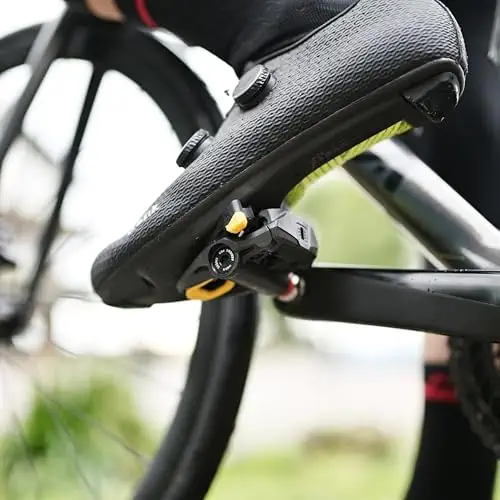
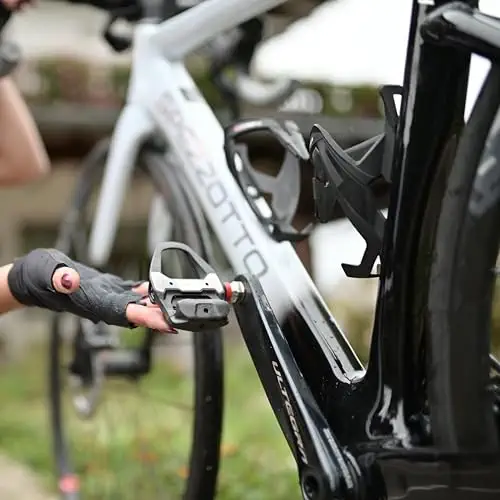
Dual-sided pedals built for SPD-SL cleats, in a compact sealed spindle.
Prices and availability on Amazon change often.
If your shoes use SPD-SL cleats, this is the pedal power meter to look at first. Reviewers praise how clean the design is, with the electronics and rechargeable battery sealed inside the spindle instead of in an external pod.
The catch is price and cleat choice: it only suits the Shimano road system, and costs more than the older Look-style pedals.


A rugged single-sided SPD pedal power meter that handles mud, water and knocks.
Prices and availability on Amazon change often.
For gravel and mountain biking, the MX-1 is the pedal power meter reviewers point to most. Its sensors and battery sit inside the spindle, which helps protect them off-road, and it is rated for water, mud and dust.
This listing is a bundle with a power bank, so check what's included before you order. If you ride very rough trails, a crank or spider meter is more protected than any pedal.


A very low-priced crank-based power meter for riders who want numbers without paying pedal prices.
Prices and availability on Amazon change often.
If the goal is just to see watts and the budget is small, this crankset is the least expensive way in. Riders who tried it report readings in the right ballpark, and it is in the same family as a better-known budget brand.
It is a gamble, though. One owner could not get it to calibrate at all, and you need to check that the crank, chainring size and your bike all fit before you buy.
Single-sided pedals like the UNO cover most riders: they give you total power and move easily between bikes. Go dual-sided if you want left/right balance data or are recovering from an injury. Pick road or MTB pedals to match your cleats, and consider a crank meter if you ride rough trails or only have one bike.
A bike power meter measures how hard you are pushing on the pedals and reports it in watts. Unlike speed or heart rate, it doesn't change with wind, hills or how tired you are, so it's a steady way to pace rides and track fitness.
For most riders, pedal power meters from Favero are the easiest to recommend: they install like normal pedals, move between bikes and have a strong reputation among owners. Which model fits depends on your cleats and whether you want one-sided or dual-sided data.
Cranksets and crank-arm meters are usually the least expensive way in, and used or discounted ones can be cheaper still. Very cheap unbranded units can be hit and miss, so look for models other riders have compared against a trainer.
Most good meters claim accuracy around ±1% to ±1.5%, and reviewers say consistency matters more than perfect absolute numbers for training. Dual-sided meters measure both legs directly, which helps if you pedal unevenly.
Favero, Garmin, Stages, 4iiii, SRAM Quarq, Power2Max, SRM and Magene come up most. Pedal systems from Favero and Garmin are popular for easy swapping between bikes.
Yes, especially if you ride more than one bike, since you can move them in minutes. The trade-offs are higher cost than some crank options and more exposure to knocks, which matters more off-road.
Why trust CheckedBest
This shortlist comes from comparing the Amazon listings for each power meter, checking what shows up in stock right now, and weighing what long-time riders and cycling reviewers keep recommending. We looked at accuracy claims, how easy each one is to move between bikes, battery life and what you get for the money.
Our expert team tests products when it is needed and researches online and in interviews. Every guide is fact-checked and edited by a real person.
The CheckedBest editorial team · Updated Oct 28, 2026
How we pickEditorial standardsAffiliate disclosureReport a mistake
We earn a commission when you buy through our links, at no extra cost to you. It never decides the winner.