Strider 12 SportBest overall
- Weight
- 6.7 lbs
- Seat height
- 11 to 17 in
- Tires
- 12 in foam, never flat
- Max rider weight
- 60 lbs
Most recommended by reviewers
Check price at Amazon
We earn a commission when you buy through our links, at no extra cost to you. How this works.
Picture the weekend: your toddler is wobbling around the driveway, you're hovering a step behind, and you're wondering whether the bike on your screen will be fun or a dust collector. One parent described buying a heavy bike first and watching their child lose interest in a week, then switching to a lighter one and seeing the grin come back. Weight and fit decide almost everything at this age.
We'd start with the Strider 12 Sport. It's light, it adjusts from first steps to age five, and it's the one parents and cycling writers mention most. The woom GO 1 is the premium pick with a hand brake, and the rest cover tighter budgets, the youngest riders and bigger kids.
1 Strider 12 Sport | 2 woom GO 1 | 3 KRIDDO Balance Bike | 4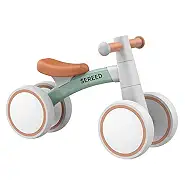 SEREED Baby Balance Bike | 5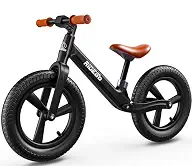 Ridego 14 Inch Balance Bike | |
|---|---|---|---|---|---|
| Best for | Best overall | Best premium | Best budget | Best for ages 1 to 2 | Best for older kids |
| Weight | 6.7 lbs | 6.4 lbs | 110 lbs | 3.6 lbs | 8.16 lbs |
| Seat height | 11 to 17 in | 10.4 to 14.4 in | Adjustable, quick release | Not listed | 14.2 to 18.3 in |
| Tires | 12 in foam, never flat | 12 in | Never-flat foam | Not listed | 14 in air-filled rubber |
| Check price at Amazon | Check price at Amazon | Check price at Amazon | Check price at Amazon | Check price at Amazon |
Strider 12 SportBest overallMost recommended by reviewers
Check price at Amazon woom GO 1Best premium
 KRIDDO Balance BikeBest budget
 SEREED Baby Balance BikeBest for ages 1 to 2
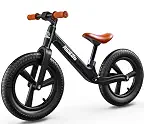 Ridego 14 Inch Balance BikeBest for older kids


The light, adjustable first bike that fits from first steps to around age 4 or 5.
Most recommended by reviewers
Check price at AmazonPrices and availability on Amazon change often.
The Strider 12 Sport is the balance bike we'd pick for most families, because it's light, adjustable and ready to ride in minutes.
At 6.7 lbs, it's light enough for a toddler to handle, and the seat adjusts from 11 to 17 in, so it stays useful for years. Reviewers note it has the largest riding range in their test, and assembly is easy with tools included. Owners say kids really enjoyed riding theirs and moved on to pedal bikes, and one family's used Strider has lasted through two kids. Owners on r/Preschoolers report that the 12-inch Strider has no pedal kit, which exists only for the 14-inch model.
The foam tires never need air, but they feel hard and ride less smoothly on rough ground than air tires. One owner also found the plastic wheels on the smallest Strider grip poorly. If your child will ride mostly on bumpy trails, that's the compromise to weigh.
If it's not for you, the woom GO 1 suits families who want a hand brake and lower seat and don't mind paying more, while the KRIDDO is the pick for tighter budgets.
The Strider shows up again and again when parents and cycling writers are asked what to buy. It is light, simple, and the seat and handlebars adjust across a wide range, so the same bike works for a child just learning to walk steadily and one who is nearly ready for pedals.
It also has a low standover height, which helps small riders hop on with confidence. Assembly is quick, and because the tires are foam there is no pump and no flat to fix. The only trade-off is ride feel on rough ground, where air tires are smoother.


A very light bike with a hand brake and steering limiter, for families who want the best.
Prices and availability on Amazon change often.
The woom is the one parents describe as a bike their kid could fling around from day one. At 6.4 pounds with a very low seat, small riders can get on and turn it easily.
The hand brake is a real advantage if you plan to move to a pedal bike later, since braking is already a habit. Several parents note it keeps its value if you resell it, which softens the price. Taller children may need the next size up sooner than with a Strider.

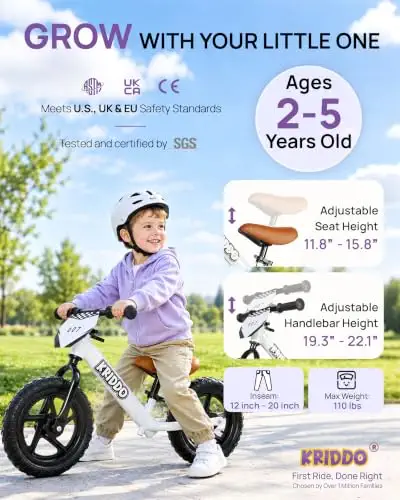
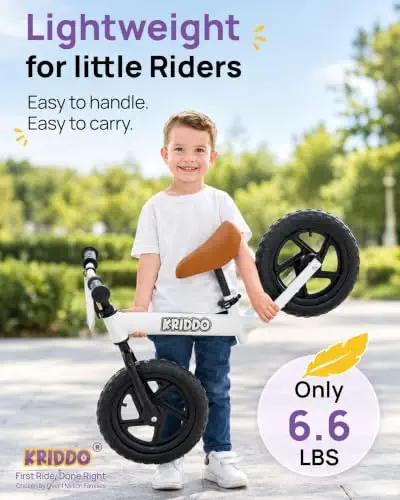


A pedal-free starter bike at a fraction of the premium price, with room to grow.
Prices and availability on Amazon change often.
If you want something that works without spending much, the Kriddo is a good starting point. Parent and pediatric-therapist posts count it among the better low-cost options, and the quick-release seat and handlebars mean it adapts as your child grows.
It does weigh more and has no hand brake, so it suits kids who are already steady on their feet.
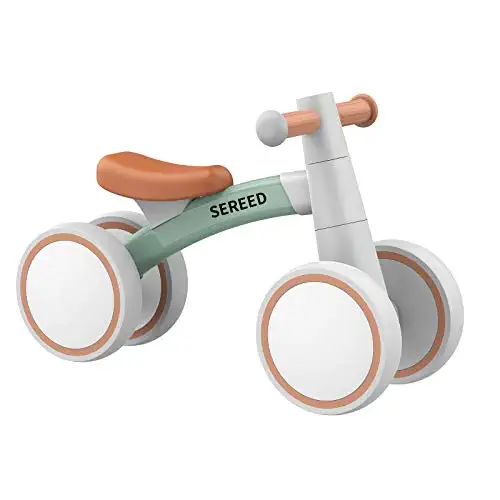
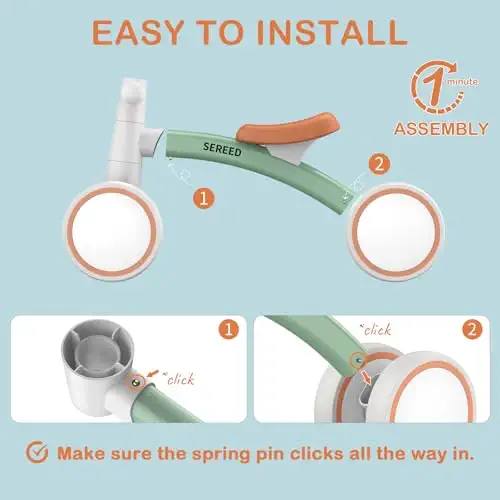
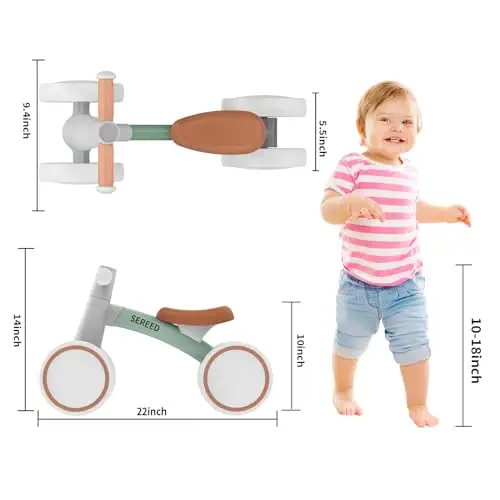


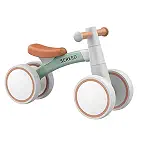
A very light four-wheel first ride for toddlers who aren't ready for two wheels yet.
Prices and availability on Amazon change often.
Some parents point out this style isn't a true balance bike because it has four wheels, and that's fair. What it does well is give a one-year-old a stable, light thing to sit on and scoot around the house.
Think of it as a bridge: it builds the push-and-steer habit until your child is ready for a two-wheeler. Plan on it lasting a year or so.
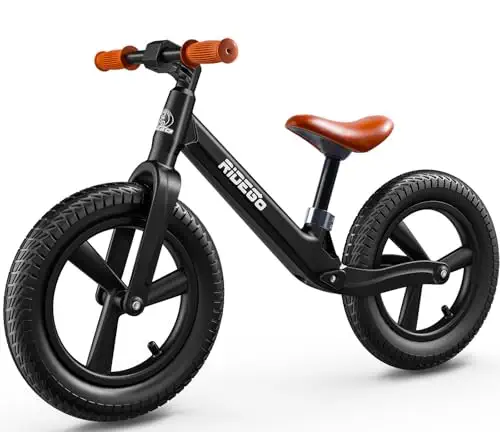


A bigger 14-inch bike with air tires for kids ready to move past a 12-inch.
Prices and availability on Amazon change often.
Once a child is tall enough that a 12-inch looks tiny, a 14-inch is the next step. The Ridego uses air-filled rubber tires, which cushion and grip better on gravel and grass, and the nylon frame keeps weight down.
It isn't the bike for a small two-year-old, but for a confident three- to five-year-old it keeps the balance-first approach going a little longer.
Weight is the biggest factor. Parents and cycling writers suggest keeping the bike under about a quarter to a third of your child's weight, so they can pick it up and steer it. Next check the seat: your child should be able to put both feet flat on the ground with a slight bend in the knee, roughly an inch below their inseam. After that, consider tires (air for comfort, foam for no maintenance) and whether you want a hand brake.
Most toddlers are ready around 18 months, once they walk steadily on their own. Some four-wheel or low models work from about 12 months. Wait until your child is confident walking and they will pick it up faster.
Many parents say yes. Balance bikes teach balance and steering first, which makes the move to a pedal bike easier and often skips training wheels. Used bikes on marketplaces are a cheap way to try one.
Kids outgrow them fast, usually in one to two years. Some children simply don't take to them, and heavy or badly fitted bikes can put a child off. Foam tires also ride harder than air tires.
A light bike with a low seat works best. The Strider 12 Sport and woom GO 1 both suit most two-year-olds, and budget bikes like the KRIDDO work if your child is steady on their feet.
For most families the Strider 12 Sport is the best all-rounder because it is light and adjusts across a wide range. If you want a hand brake and don't mind the price, the woom GO 1 is the step up.
Why trust CheckedBest
This shortlist is built from 5 balance bike listings compared side by side, each confirmed in stock right now. We weighed weight, seat height range, tire type, brakes and age fit, then cross-checked them against what parents and cycling writers keep recommending.
Our expert team tests products when it is needed and researches online and in interviews. Every guide is fact-checked and edited by a real person.
The CheckedBest editorial team · Updated Oct 28, 2026
How we pickEditorial standardsAffiliate disclosureReport a mistake
We earn a commission when you buy through our links, at no extra cost to you. It never decides the winner.